At Featherstone Primary School, we provide our children with a high-quality, ambitious and engaging learning experience. The curriculum is carefully sequenced so that knowledge and skills are built step by step, helping pupils to become confident, independent learners.
In English, we develop children's reading, writing, spelling, grammar and vocabulary through rich, high-quality texts and carefully planned lessons. Children learn how language works, explore a wide range of genres and authors and develop the skills needed to communicate effectively and creatively. The curriculum promotes a love of reading while ensuring children are well prepared for the next stage of their education.
At Featherstone Primary School, our reading curriculum develops confident, fluent and enthusiastic readers. The curriculum is built around high-quality, carefully selected texts that expose children to a rich range of authors, genres, cultures and themes. Through a structured progression from Year 2 to Year 6, pupils develop the key reading skills of vocabulary, fluency, comprehension, inference, prediction, retrieval and explanation. The curriculum ensures that these skills are revisited and built upon over time so that children can apply them independently across a wide range of texts. We provide carefully sequenced lessons, modelled reading opportunities, rich discussion activities and targeted questioning that encourage pupils to think deeply about what they read and justify their ideas using evidence from the text. Alongside this, children develop a broad vocabulary and a deeper understanding of language, enabling them to become thoughtful, reflective readers who read for both pleasure and purpose. Spelling, Punctuation and Grammar (SPaG)
At Featherstone Primary School, we develop children's understanding of spelling, punctuation and grammar in a clear, progressive and engaging way. The curriculum is carefully sequenced so that knowledge and skills build year on year, enabling pupils to become confident and accurate communicators. A key feature of the spelling curriculum is the teaching of morphology - the study of how words are formed through roots, prefixes and suffixes. By understanding the meaning and structure of words, children develop stronger spelling skills, broaden their vocabulary and apply their knowledge to unfamiliar words with greater confidence. Alongside this, pupils receive explicit teaching of grammar concepts, sentence structure and punctuation, with regular opportunities to practise, discuss and revisit prior learning. This approach helps children to retain and apply their knowledge effectively in both reading and writing. By developing strong foundations in SPaG, children are equipped to write with increasing accuracy, creativity and confidence across the curriculum, preparing them for future learning and lifelong communication.
Handwriting – Letter-join
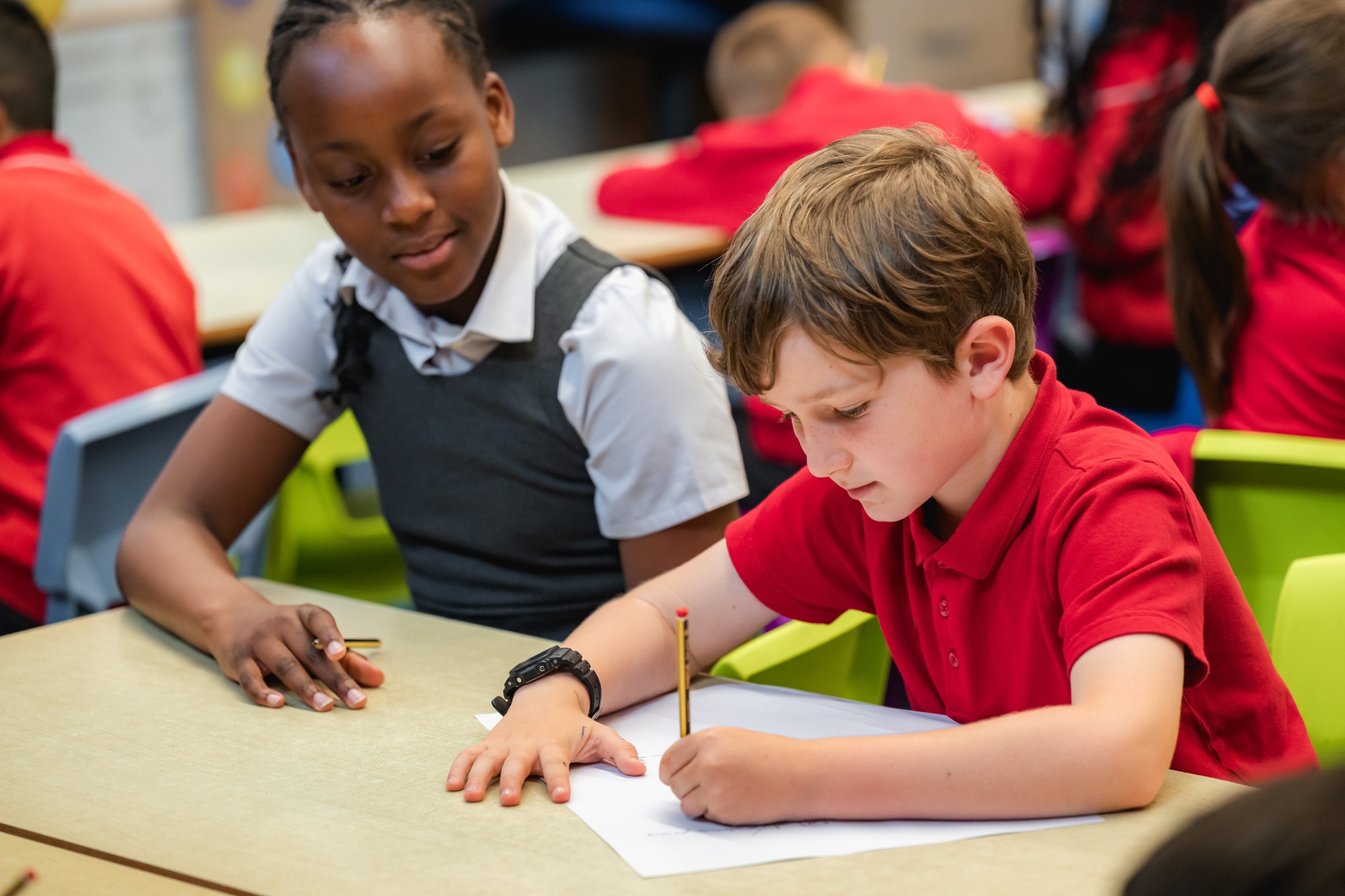
At Featherstone Primary School, we use Letter-join, a structured and engaging handwriting programme that helps children develop clear, fluent and well-presented handwriting. Through a carefully planned progression, pupils learn correct letter formation, sizing and positioning before moving on to joined handwriting. Lessons provide consistent modelling, practice opportunities and interactive resources that support children in developing good handwriting habits from an early age. As pupils progress through the school, they build speed, accuracy and confidence, enabling them to write efficiently across all areas of the curriculum. High standards of presentation are encouraged, helping children to take pride in their work while developing a lifelong skill that supports successful communication.
Through engaging lessons, regular retrieval of prior learning and a clear progression of knowledge and skills, we aim to ensure every child achieves their full potential and develops a lifelong love of learning.
Grammarsaurus Writing Overview